
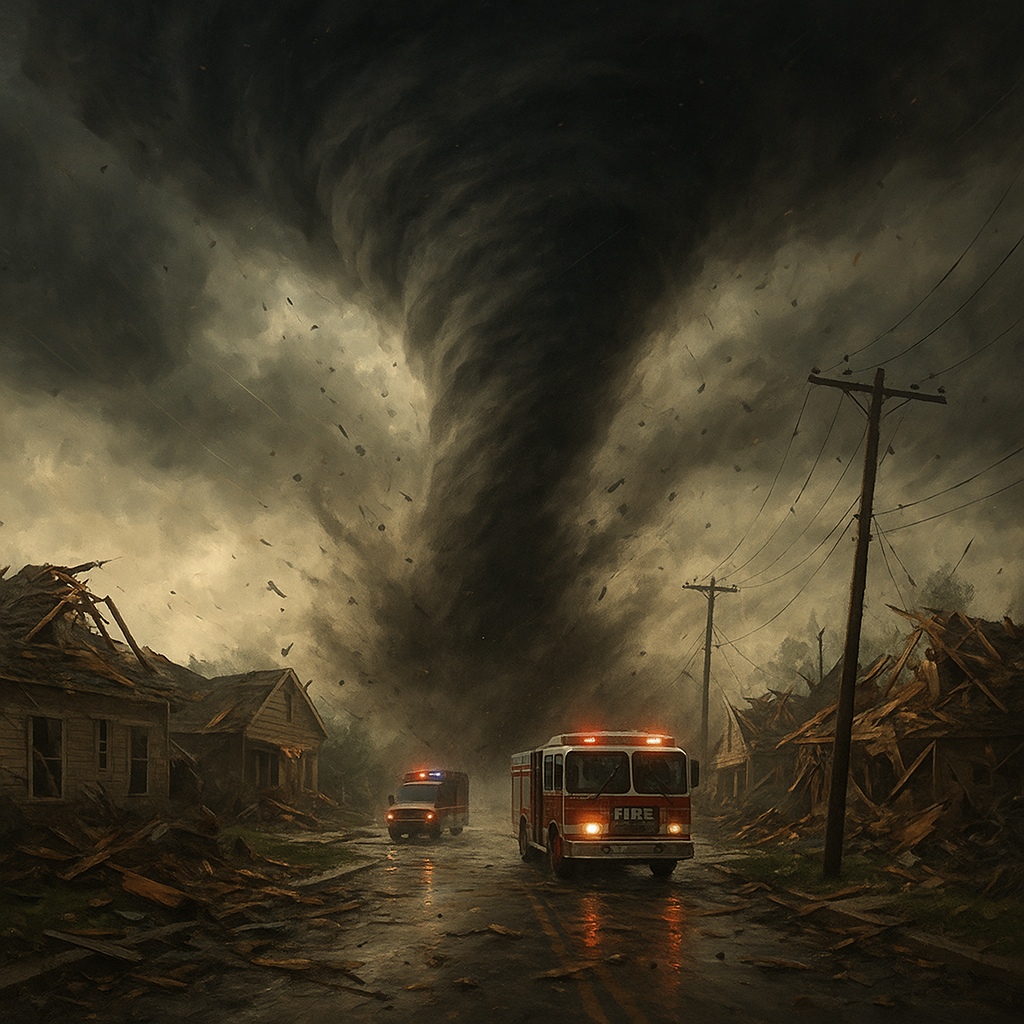
🌪️ Twister Tears Through Town: How a Community Faced Nature’s Wrath
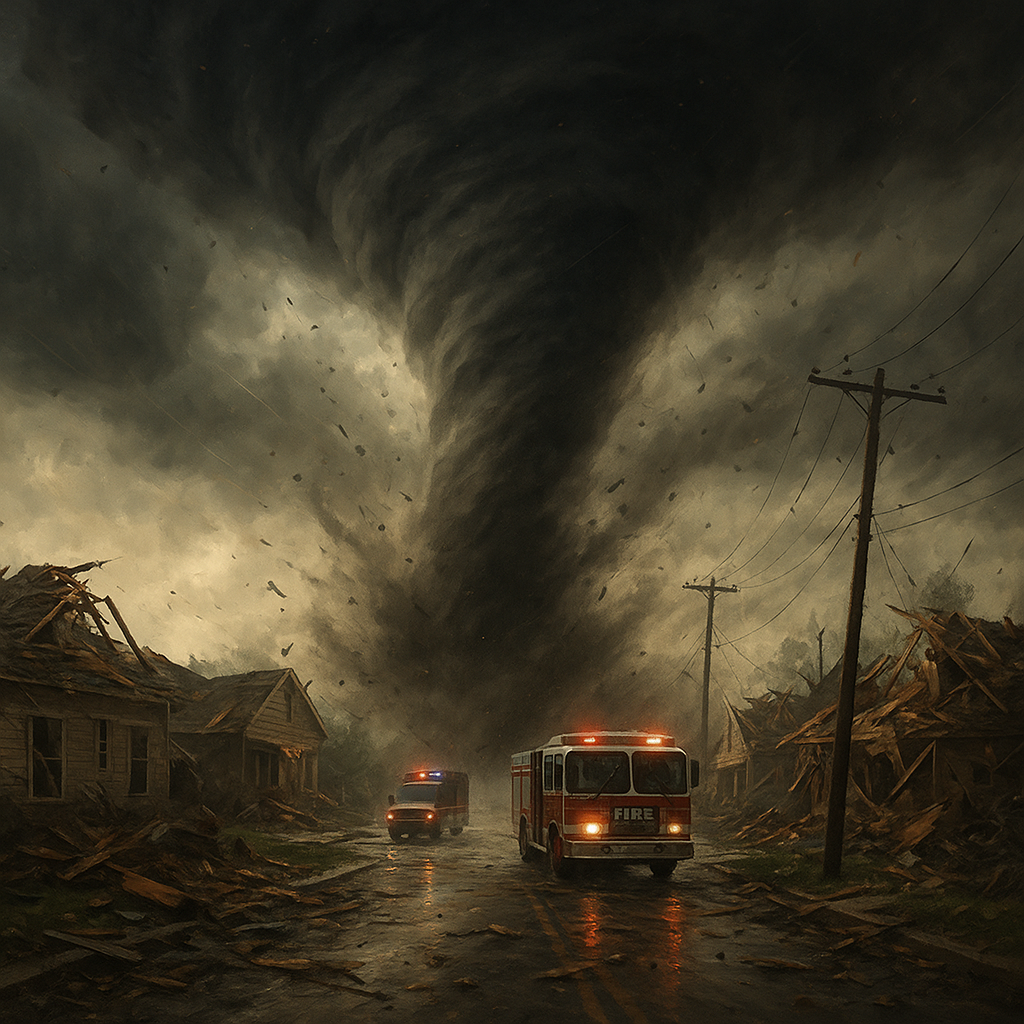
When nature strikes without warning, the results can be devastating. On a quiet afternoon, residents of a serene Midwestern town found themselves in the crosshairs of a violent twister. Sirens screamed, skies darkened, and within minutes, the town was turned upside down.
In this blog, we explore the event, the community’s response, and the valuable lessons we can all learn from this disaster.
🌪️ What is a Twister?
A twister is a colloquial term for a tornado, often used in the United States. Tornadoes are formed during severe thunderstorms, especially when warm, moist air collides with cold, dry air, creating atmospheric instability.
🔄 How It Forms:
- Wind Shear: Different wind speeds/directions create rotation in the air.
- Updrafts: Warm air rises, pulling the rotating air upward.
- Funnel Cloud: This rotating column may reach the ground.
- Tornado Touchdown: Once it hits the ground, it becomes a twister.
💥 What Makes It a Disaster?
A twister becomes a disaster when it causes significant:
- Loss of life
- Property destruction
- Displacement of communities
- Disruption of infrastructure and services
Even a twister that lasts just minutes can flatten homes, overturn vehicles, and leave behind a trail of trauma and economic hardship.
🚨 Common Impacts of a Twister Disaster
| Impact Type | Description |
|---|---|
| 🏚️ Physical Damage | Buildings torn apart, trees uprooted, power lines downed |
| 🧍 Human Toll | Injuries, fatalities, psychological trauma |
| 🚧 Infrastructure | Road blockages, power outages, collapsed communication |
| 🐾 Livelihood Loss | Farms destroyed, businesses ruined |
| 🌍 Environmental | Ecosystem damage, water contamination |
📏 How Twisters Are Measured
Twisters are rated on the Enhanced Fujita (EF) Scale, which ranks tornadoes from EF0 (weakest) to EF5 (strongest) based on damage caused.
- EF0–EF1: Minor damage (trees down, roof tiles off)
- EF2–EF3: Significant damage (roofs torn off, walls collapsed)
- EF4–EF5: Catastrophic (houses leveled, cars thrown)
🧠 Why They’re So Dangerous
- Unpredictable path — can suddenly change direction
- Speed — wind gusts can exceed 200+ mph
- Low warning time — sometimes only minutes to react
- Wide reach — even small towns can suffer large-scale loss
🛡️ Preparing for a Twister Disaster
Preparation is key to survival. Here’s what experts recommend:
- Install tornado alert apps or radios
- Have an emergency kit ready (water, food, meds, flashlight)
- Know your local shelters or safe rooms
- Practice tornado drills, especially in schools and workplaces
❤️ Famous Twister Disasters
- Joplin, Missouri (2011): EF5 tornado killed 158 people
- Moore, Oklahoma (2013): EF5 tornado, $2B+ damage
- Tri-State Tornado (1925): Deadliest in US history (695 deaths)
A twister disaster is one of the most violent and fast-moving types of natural disasters, capable of wiping out entire neighborhoods in minutes. Understanding how they form, their warning signs, and how to stay safe can mean the difference between survival and tragedy.
Twister2025 #NaturalDisaster #TornadoPreparedness #EmergencyResponse #StormDamage #RebuildStronger #DisasterRelief
Leave a Reply