

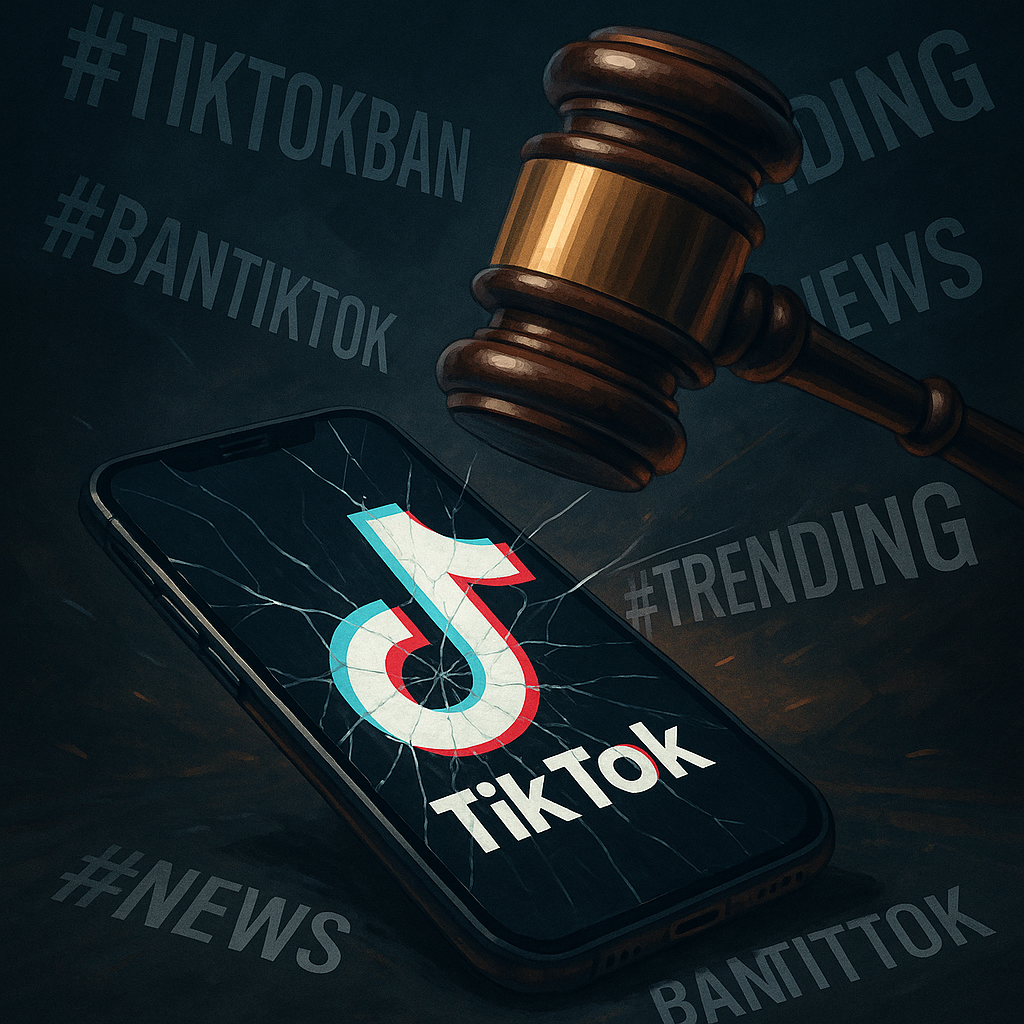
🇺🇸 The U.S. Legislation: What’s New in 2025?
In April 2025, U.S. President signed into law the Protecting Americans from Foreign Adversary Controlled Applications Act. This legislation specifically targets apps like TikTok that are controlled by companies from countries deemed adversaries — including China, Russia, Iran, and North Korea.
Key Points of the Law:
- ByteDance (TikTok’s parent company) has 270 days (with a possible 90-day extension) to divest TikTok’s U.S. operations.
- If ByteDance fails to sell, app stores and web hosting services will be forced to block TikTok in the U.S..
- This has created a clear legal pathway for a nationwide ban, unlike previous efforts that stalled in court.
⚖️ Legal & Political Reactions
- ByteDance has signaled it may fight the ban in court, arguing that it violates the First Amendment.
- Civil liberties groups like the ACLU and EFF argue that banning a platform because of its origin is a slippery slope.
- Meanwhile, several tech and media companies have shown interest in possibly acquiring TikTok’s U.S. assets — but ByteDance has repeatedly said it will not sell its algorithm, which is the heart of TikTok’s success.
🌐 Beyond the U.S.: Global Ripple Effects
- Europe is increasing pressure on TikTok regarding data practices under GDPR.
- Australia and New Zealand have limited TikTok usage on government devices.
- African and Latin American nations are watching the U.S. case closely — it may set a precedent for platform governance worldwide.
🔎 What’s at Stake?
💼 Business Impact
- TikTok has over 170 million U.S. users, making it one of the most engaged platforms for Gen Z and Millennials.
- Brands spend billions in influencer partnerships and TikTok ads, meaning a ban could disrupt digital marketing ecosystems.
- Many small businesses that rely on viral TikTok content for traffic and sales are scrambling to diversify to other platforms.
🎨 Creator Economy Fallout
- The app’s unique For You algorithm helps small creators get massive exposure, unlike the “pay-to-play” nature of other platforms.
- A ban would likely cause a migration to YouTube Shorts, Instagram Reels, and Snapchat Spotlight, but creators fear these platforms lack TikTok’s discovery power.
🚨 TikTok’s Next Moves
Counterstrategy (As of June 2025):
- User Mobilization: TikTok is prompting users to contact lawmakers, using in-app notifications to raise awareness.
- Transparency Measures: TikTok emphasizes its Project Texas — an initiative where U.S. data is stored domestically on Oracle servers.
- Legal Preparations: ByteDance is preparing a constitutional challenge, citing violation of free speech and due process.
🔁 Public Sentiment: Deeply Divided
- Supporters of the ban: Argue it’s about protecting U.S. sovereignty, preventing influence operations, and safeguarding minors.
- Opponents of the ban: See it as government overreach, a threat to digital expression, and harmful to the creator economy.
Polls Suggest:
- Around 50–60% of Americans support some form of restriction.
- Younger demographics (18–29) are overwhelmingly opposed to a ban.
⏳ What Should Users Do Now?
✅ Practical Steps:
- Download your TikTok content to preserve your work.
- Start building followings on Instagram, YouTube, or Lemon8 (another ByteDance app).
- Watch for creator fund shifts or sponsorship changes across platforms.
🧭 Strategize Like a Pro:
Disclaimer:
This blog is intended for informational and educational purposes only. The views expressed are personal opinions or general insights, not professional or legal advice. Readers should do their own research or consult relevant professionals before taking action based on this content.
#TikTokBan #TikTokNews #ByteDance #TikTokUpdate #SocialMediaTrends #CreatorEconomy #TechNews #DigitalRights #FreeSpeechOnline #SaveTikTok #TrendingNow #TikTokDrama #BanTikTok #DataPrivacyMatters #NewsToday#Carrerbook#anslation
Leave a Reply